
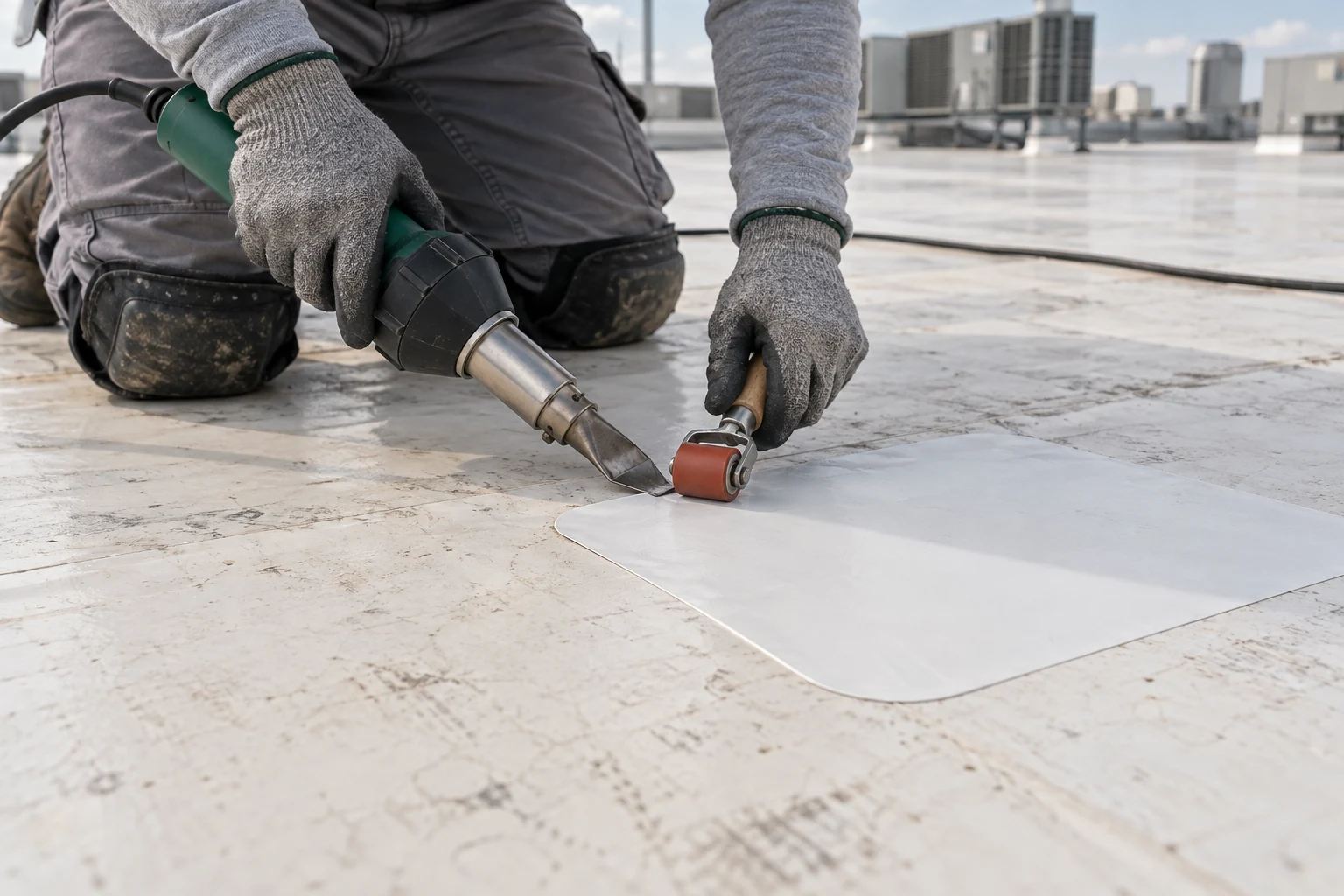
For A Known TPO Membrane
TPO Roof Repair
Repair open seams, punctures, and damaged flashing on an identified TPO membrane.
Explore The Repair Approach →Flagstaff, Arizona · Commercial Properties
Commercial flat roof repairs for TPO, EPDM, PVC, and rubber membranes. We investigate the leak and explain what needs fixing.
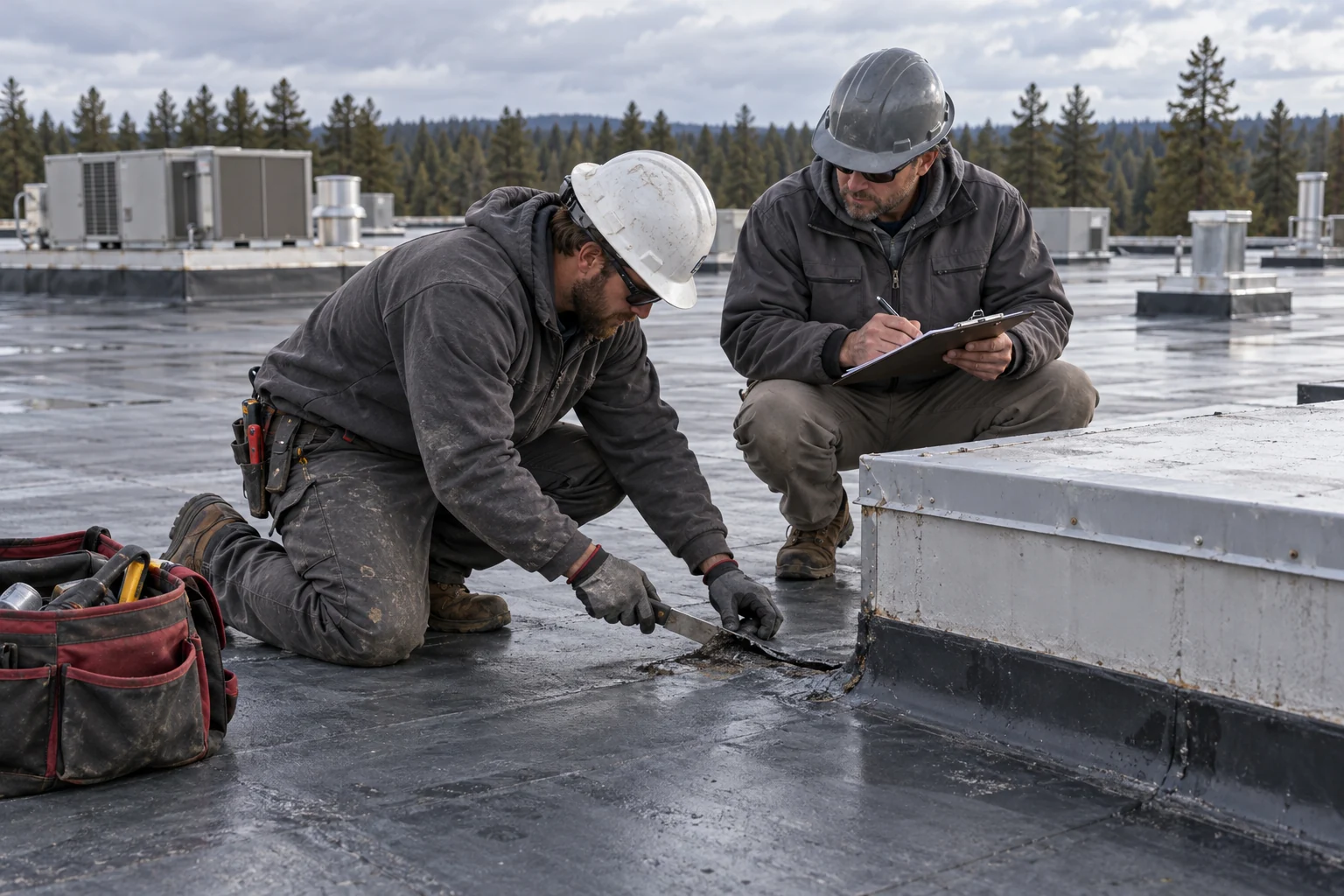
Water appearing inside a building does not always enter the roof directly above that spot. It can travel along roof layers or connected details before becoming visible. A useful repair starts by investigating the source and checking the affected materials.
At FlagstaffFlatRoofRepair.com, we help commercial owners and property managers with leaking seams, damaged flashing, punctures, and recurring roof problems. We identify the membrane and recommend compatible work for its condition.
If you know the roof material, start with its repair guide. If your records only say rubber, we can help establish what the roof is made of.
For A Known TPO Membrane
Repair open seams, punctures, and damaged flashing on an identified TPO membrane.
Explore The Repair Approach →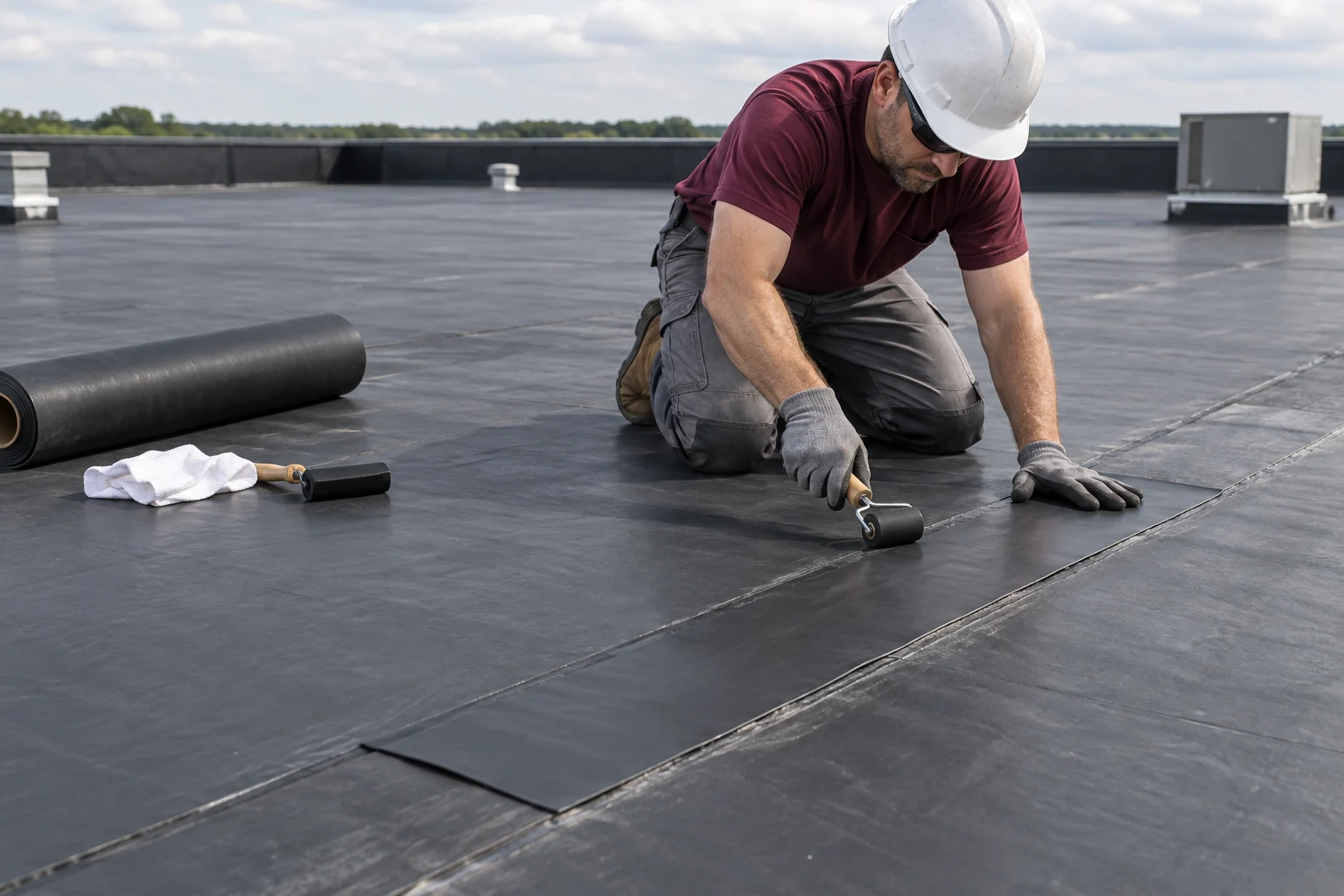
For A Known EPDM Membrane
Repair commercial EPDM rubber using materials that suit the existing membrane and its condition.
Explore The Repair Approach →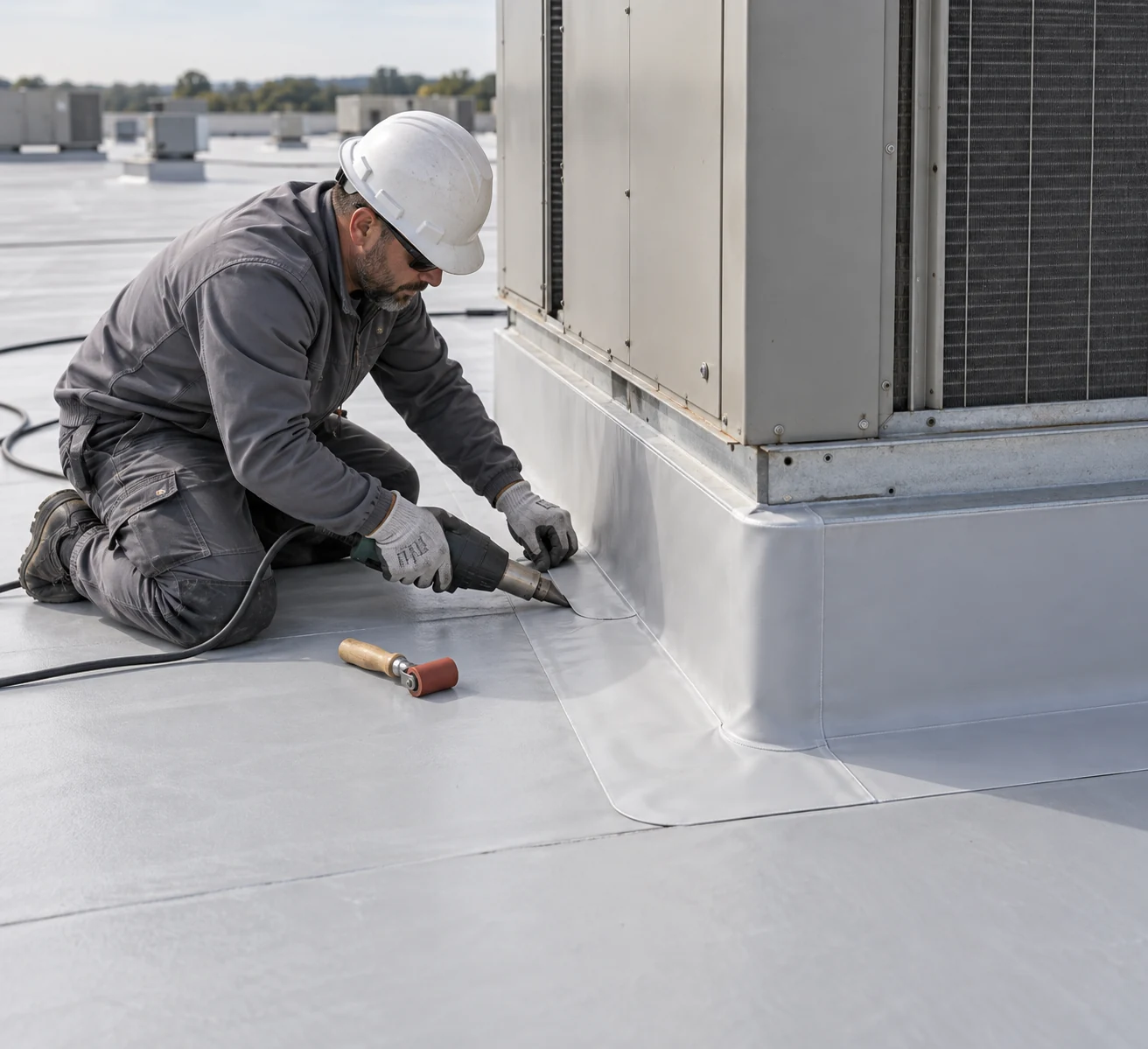
For A Known PVC Membrane
Address leaks and damaged details with repairs compatible with the building’s PVC roofing system.
Explore The Repair Approach →
When The Material Is Uncertain
Identify an unfamiliar rubber roof and work out which repair materials can be used safely.
Explore The Repair Approach →Cuts, punctures, or open seams may need a localized repair when the surrounding material remains suitable.
Flashing around equipment, pipes, walls, and drains may need repair even when the main sheet looks sound.
Recurring leaks or moisture below the surface can require more investigation than a single visible defect suggests.
Previous repairs are part of the roof’s history, not proof that the current leak has the same cause. We review what was done and whether the materials still hold. If the entry point was missed or the roof has deteriorated further, simply adding another patch may not resolve it.
A targeted repair can preserve usable roofing. It cannot restore damaged support, dry wet insulation, or correct drainage by itself. Those conditions need their own recommendations.
Record when and where water appears and what repairs or rooftop work came before it.
Check the membrane and the roof details relevant to the problem.
Describe the work, preparation, and compatible materials needed, including any limits.
Check the repair and explain what to report if the symptom changes or returns.
We serve commercial properties in Flagstaff and the communities below. Share the building address and the affected area when you call; you do not need to diagnose the roof first.
You can start with a simple description: which room is affected, when water appears, and whether the problem has happened before. Include recent equipment work or known roof repairs. Those observations help us prepare for the assessment, but you do not need to identify the membrane or locate the entry point yourself.
If you manage more than one building, keep each leak report separate. A clear building name and roof-area description help connect the findings with the right property.
Often a localized defect can be repaired if the surrounding roof and underlying materials are suitable. Extensive deterioration or moisture can change that recommendation.
EPDM is a specific synthetic rubber membrane. The rubber repair guide helps when the material is not yet confirmed; it is not a separate product from a known EPDM roof.
Not reliably. Water can travel before becoming visible. The roof and connected details need inspection to establish the entry point.
We assess them. The previous materials, adhesion, and surrounding membrane determine whether they can remain or need removal for a suitable repair.
The defect, repair area, preparation, access, and affected layers determine the work. The total roof area alone cannot provide an accurate repair price.
Call (928) 438-8009, describe the affected area, and ask about the next available step.
Call (928) 438-8009 to discuss your building and arrange the next step.