
Open Or Damaged Seams
Check the affected joint and nearby membrane to determine how far a suitable repair needs to extend.
Commercial Flat Roof Repair
Repairs for commercial TPO roof seams, punctures, and flashing, based on the condition of the membrane and the cause of the leak.
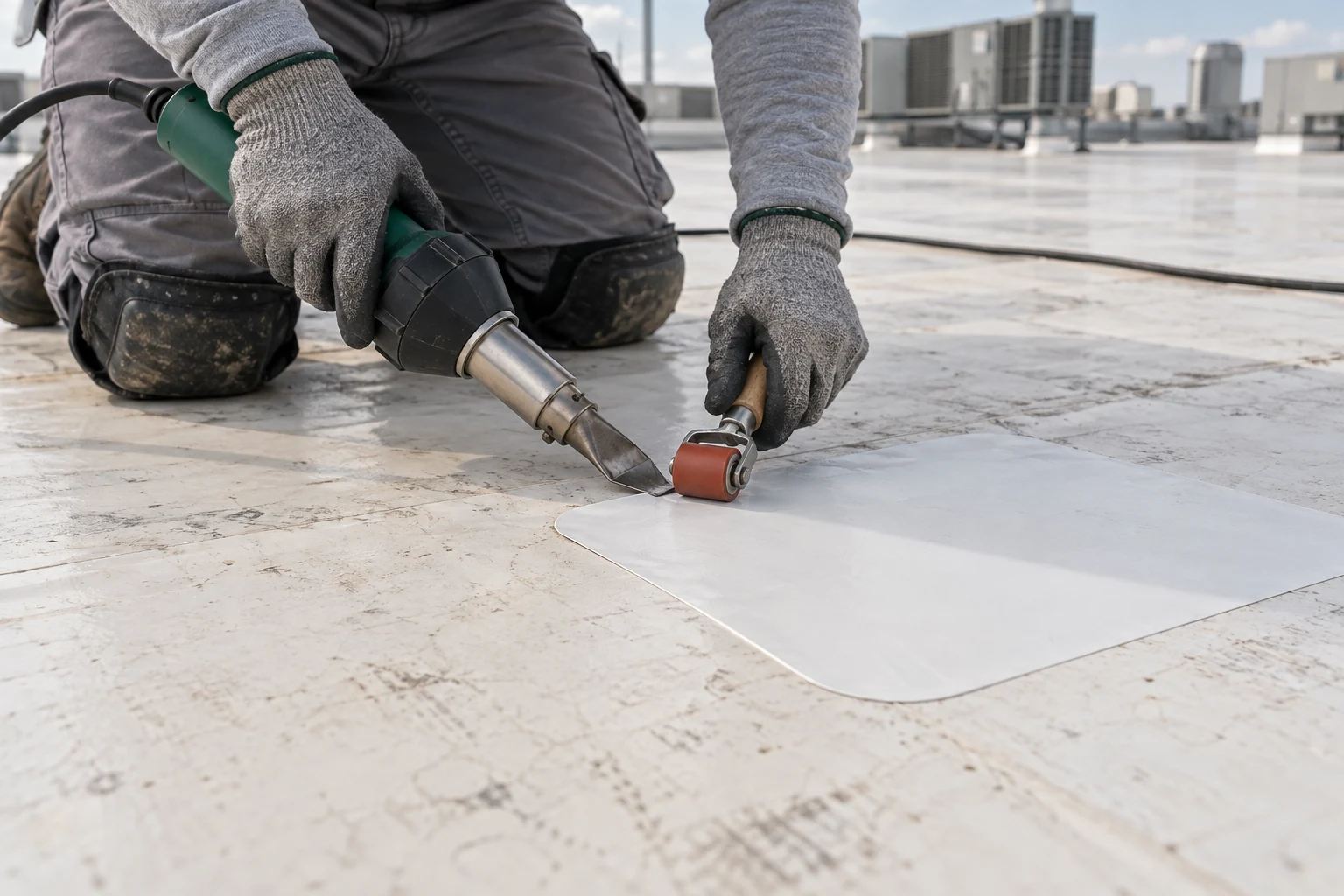
TPO is a thermoplastic sheet membrane with heat-welded seams. A repair normally needs compatible material and a surface that can be prepared for the specified connection. An older TPO roof may still be repairable, but dirt, weathering, and previous patches must be considered first.
We offer TPO roof repair for Flagstaff commercial buildings. We inspect the reported problem and surrounding roof details, then explain the recommended work. The goal is to address the water entry point and any affected roof materials, not simply cover the spot nearest the indoor stain.
Check the affected joint and nearby membrane to determine how far a suitable repair needs to extend.
Review the damage and the roof beneath it. A small surface opening may still require investigation of moisture below.
Inspect the weatherproofing around curbs, pipes, and other openings, including areas altered by earlier service work.
A new repair must connect to sound, properly prepared material. The cleaning method, patch, and welding procedure depend on the identified roof system. An unexplained strip of sealant across a seam is not the same as a specified membrane repair.
When the surface will not support the intended repair, the work may need to extend farther or use another manufacturer-supported method. We explain that limitation before treating a small patch as a complete answer.
Review when water appears and inspect relevant seams, flashing, and nearby details.
Confirm the material and assess its condition and the extent of damage.
Use compatible materials and the required preparation and joining method.
Review the completed repair and identify any remaining condition that needs attention.
Repeated leaks can mean the original cause was missed, the previous repair failed, or another defect has developed. Wet insulation, deteriorated support, or widespread membrane damage can also change the work needed. We separate those findings from a repair limited to one visible opening.
If your records do not confirm TPO, start with our guide to identifying an unfamiliar roof. If they identify PVC, use the PVC repair guide instead; the materials are not interchangeable.
Ask for the repair locations, preparation, materials, and any work below the membrane to be described. Access and previous repairs can affect the price. The entire building’s square footage does not determine the cost of fixing one seam or equipment curb.
A puncture can look small while the surrounding membrane has other problems. We check nearby seams, existing patches, and the condition of the surface before deciding how the repair should connect. The material needs to support the proposed preparation and welding method.
If there are several defects, the repair description should identify their locations. Ask whether the price covers one visible opening or all of the areas found during assessment. Wet insulation or damage below the sheet needs a separate explanation.
After repair, keep the findings and material information with the building records. Tell the responsible contractor if the symptom returns or moves to another room. That information can help determine whether the repaired detail or a different source needs attention.
Often it can, if suitable material remains around the defect. The contractor must assess weathering, contamination, and whether the proposed repair can make a reliable connection.
No. PVC and other roof finishes can also be light-colored. Records, markings, and inspection should establish the material.
It depends on the cause. The leak may involve the membrane, flashing around the equipment, or another component. The affected details need inspection before the repair is chosen.
The method and products must be suitable for conditions at the roof. Cold, wet, or icy conditions can limit preparation and repair work.
Not automatically. Drainage problems require separate assessment, even when a membrane defect can be repaired.
Record when and where water appears and contact the party responsible for the repair. Keep the original scope and any coverage documents available so the new observation can be investigated.
Call (928) 430-5707 to discuss your building and arrange the next step.