
Seam Repairs
An opening along a sheet joint needs a suitable seam repair over properly prepared rubber.
Commercial Flat Roof Repair
Commercial EPDM rubber roof repairs for leaking seams, damaged flashing, punctures, and problems around previous patches.
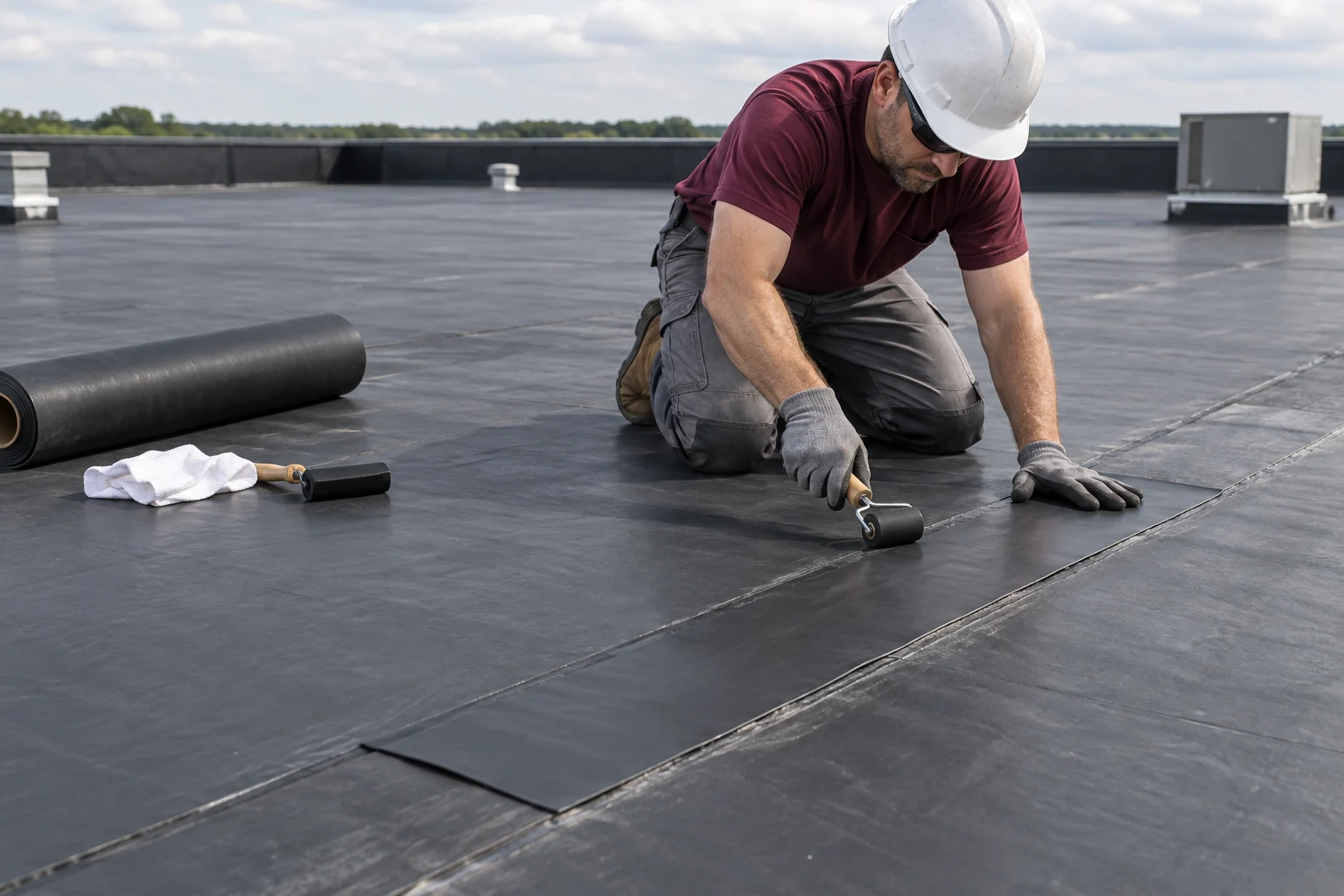
EPDM is a synthetic rubber membrane used on commercial low-slope roofs. Its repairs rely on compatible materials and careful preparation. It should not be repaired as though it were a TPO or PVC sheet with a standard hot-air welded seam.
We offer EPDM roof repair in Flagstaff. The assessment starts with the reported leak, the surrounding rubber, and the details where water may enter. We also review older patches because the next repair needs to account for what is already on the roof.
An opening along a sheet joint needs a suitable seam repair over properly prepared rubber.
Corners, pipes, equipment bases, and roof edges need flexible, compatible weatherproofing details.
Damage in the main roof area or a lifting patch may be repairable once the surrounding material is assessed.
An EPDM repair can involve approved cleaners, primers, seam tape, or flashing, depending on the system and defect. The surface must be prepared as instructed. Applying new material over loose patches, contamination, or incompatible sealants can undermine the repair.
Where the rubber has pulled away at a wall or opening, a patch alone may not address the reason it moved. The inspection should consider the connected detail and attachment as well as the visible gap. Broader work may be needed to reach suitable material.
Identify the affected area and what has already been tried.
Check seams, flashing, old patches, and signs that moisture may extend below the membrane.
Prepare the surface and use the specified primer, patch, tape, or flashing for the repair.
Keep the repaired locations and any remaining concerns clear for future maintenance.
A targeted repair can address a defined defect while leaving usable roofing in place. It does not establish that every other part of the roof is in good condition. If deterioration is widespread or insulation is wet, the recommendation may need to cover more than the visible seam.
If the material has not yet been confirmed, our rubber roof repair page explains the identification step. EPDM and rubber are related terms, not competing products that require two separate repairs.
Bring repair invoices, product names, and the location of indoor water marks if available. Tell us about recent equipment visits or changes near the leak. You do not need to climb onto the roof or diagnose the defect before calling.
An EPDM patch needs a suitable connection to the existing rubber. Dirt, old sealants, loose coatings, or deterioration can interfere with the selected repair method. We assess those conditions before recommending the materials and preparation for the affected area.
The repair estimate should explain whether earlier patch material will be removed and what remains underneath it. Compatible primer, tape, and flashing need to be used according to the chosen system’s instructions. A product that worked on another roof is not automatically suitable here.
Keep details of the completed repair, especially when the roof already has several generations of patches. Clear records help a future visit identify the actual membrane and earlier work without relying entirely on appearance.
Yes, when the damage is limited and the surrounding membrane and roof layers remain suitable. The repair area must be large enough to connect to sound material.
Standard EPDM seam repairs use compatible seam and flashing products rather than treating the rubber as a heat-weldable thermoplastic. Follow the identified system’s method.
Sometimes, but only after identifying the materials and checking their condition and adhesion. Loose or incompatible material may need removal.
Not necessarily. The visible opening may be small while water has affected underlying layers. Inspection helps establish the actual extent of work.
Conditions and product requirements determine whether work can proceed. Surface moisture, ice, and material handling can affect the available method and timing.
The locations, defect being addressed, preparation, repair products, and any underlying work should be clear. Ask about exclusions and any coverage offered for that specific repair.
Call (928) 430-5707 to discuss your building and arrange the next step.