
Membrane Condition
Weathering and contamination affect how the surface can be prepared for a compatible repair.
Commercial Flat Roof Repair
Compatible repairs for commercial PVC membranes, including leaking seams, punctures, and flashing around rooftop equipment.
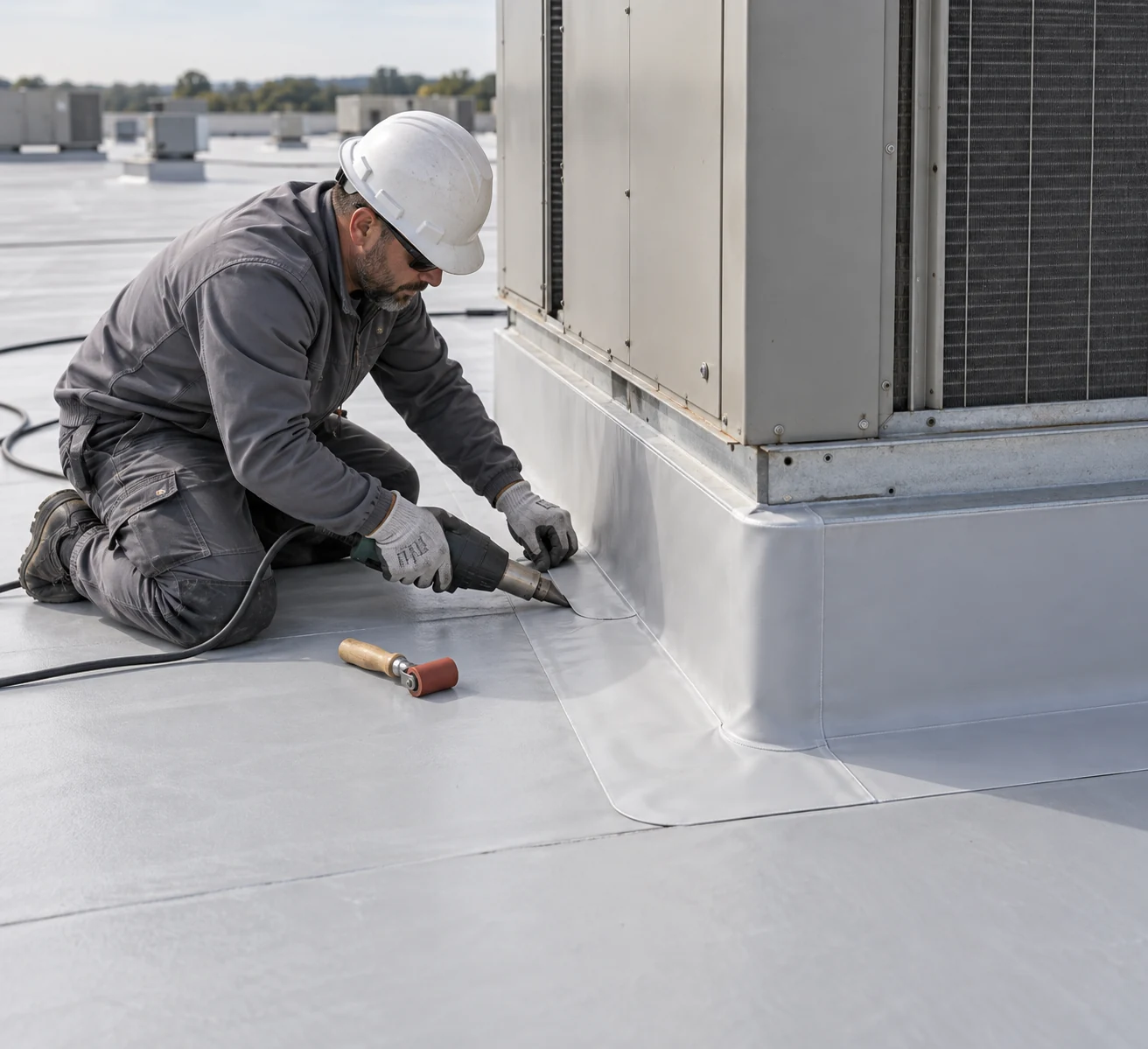
PVC is a thermoplastic roofing membrane commonly joined with heat-welded seams. Repairs must be compatible with the existing PVC system. A similar color does not make a TPO patch, generic sealant, or unfamiliar repair product a suitable substitute.
We offer PVC roof repair for Flagstaff commercial properties. We inspect the reported leak and relevant nearby details, then assess the preparation and repair needed. The condition of the existing sheet matters as much as the size of the visible opening.
Equipment bases, pipes, vents, and drains interrupt the main roof surface. The flashing around these features creates the weatherproof connection. A leak near a unit may involve that connection, the surrounding membrane, or another component.
Tell us about recent HVAC or other rooftop work. If equipment must be moved or disconnected, responsibilities need to be agreed with the appropriate trade. The repair should leave a complete weatherproof detail, not an opening waiting for someone else to finish.
Weathering and contamination affect how the surface can be prepared for a compatible repair.
Old patches, coatings, or sealants need identification. Some may have to be removed to reach suitable PVC.
Identify grease, chemicals, or unusual exhaust. Resistance depends on the specific membrane and exposure.
Trace the reported leak and check seams, flashing, and nearby equipment details.
Identify the PVC and review the repair materials and preparation required.
Prepare and complete the membrane or flashing work using the appropriate method.
Check the repair and explain any drainage, equipment, or underlying condition outside that work.
If a seam opens because of a wider problem, covering the gap may not be enough. The repair recommendation should explain what was found and whether adjacent details also need work. Any suspected moisture below the sheet deserves review.
For a roof identified as TPO, see TPO roof repair. For records that only say rubber or single-ply, use our roof identification guide before choosing materials.
Let us know which equipment receives regular maintenance and how technicians reach it. Approved walkway protection may be appropriate where traffic is frequent. Coordinating service access can help keep later work from damaging a completed repair.
PVC roof repairs need to account for what is already on the building. A previous patch, coating, or equipment alteration may affect how new material can connect to the membrane. We check those details before recommending a repair based only on the visible damage.
Leaks near a pipe or rooftop unit may involve the flashing, adjoining seams, or another connected part of the roof. The assessment should identify the defect and explain the repair location. It should also say whether any underlying materials need further investigation.
Ask for the product information and repaired areas to be recorded after completion. Those records are useful if the building later needs additional equipment or another roof repair. They help avoid mixing materials because two membranes happen to look similar.
Yes, if the surrounding membrane and underlying roof can support a compatible repair. The surface must be prepared and the repair completed according to the identified system.
Do not assume compatibility. PVC and TPO are different membranes, even when both are white. Use materials and methods supported for the existing system.
No. Chemical resistance depends on the particular product, substance, concentration, and exposure. Unusual discharges near the roof should be identified and reviewed.
That depends on what must be moved or disconnected. The roofing and equipment trades should agree on access, temporary protection, and final flashing responsibilities.
Often a defined flashing defect can be repaired separately when the adjoining material is suitable. The repair must connect correctly to the roof that remains.
The timing is useful information, but it does not prove the cause. Review the work history and inspect the equipment and nearby roof details before selecting a repair.
No. TPO and various coatings can also appear white. Records and inspection need to establish the membrane before repair materials are chosen. Existing patches or finishes may complicate identification, so tell us what is known and allow uncertain details to be checked.
Call (928) 430-5707 to discuss your building and arrange the next step.