
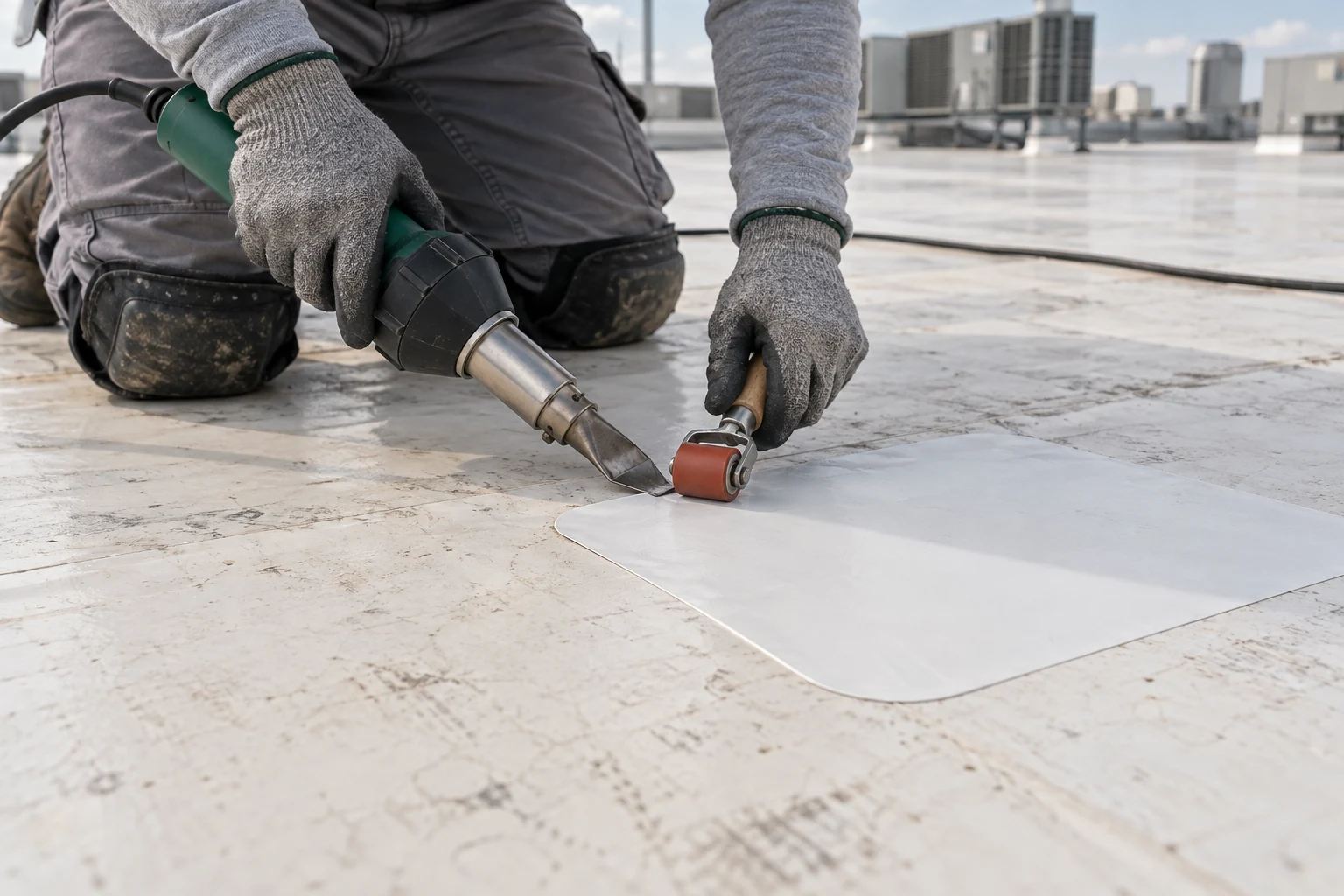
For A Known TPO Membrane
TPO Roof Repair
Repair open seams, punctures, and damaged flashing on an identified TPO membrane.
Explore The Repair Approach →The Repair Service Guide
Explore repairs for your commercial roof material, or start with identification if you are not sure what is installed.
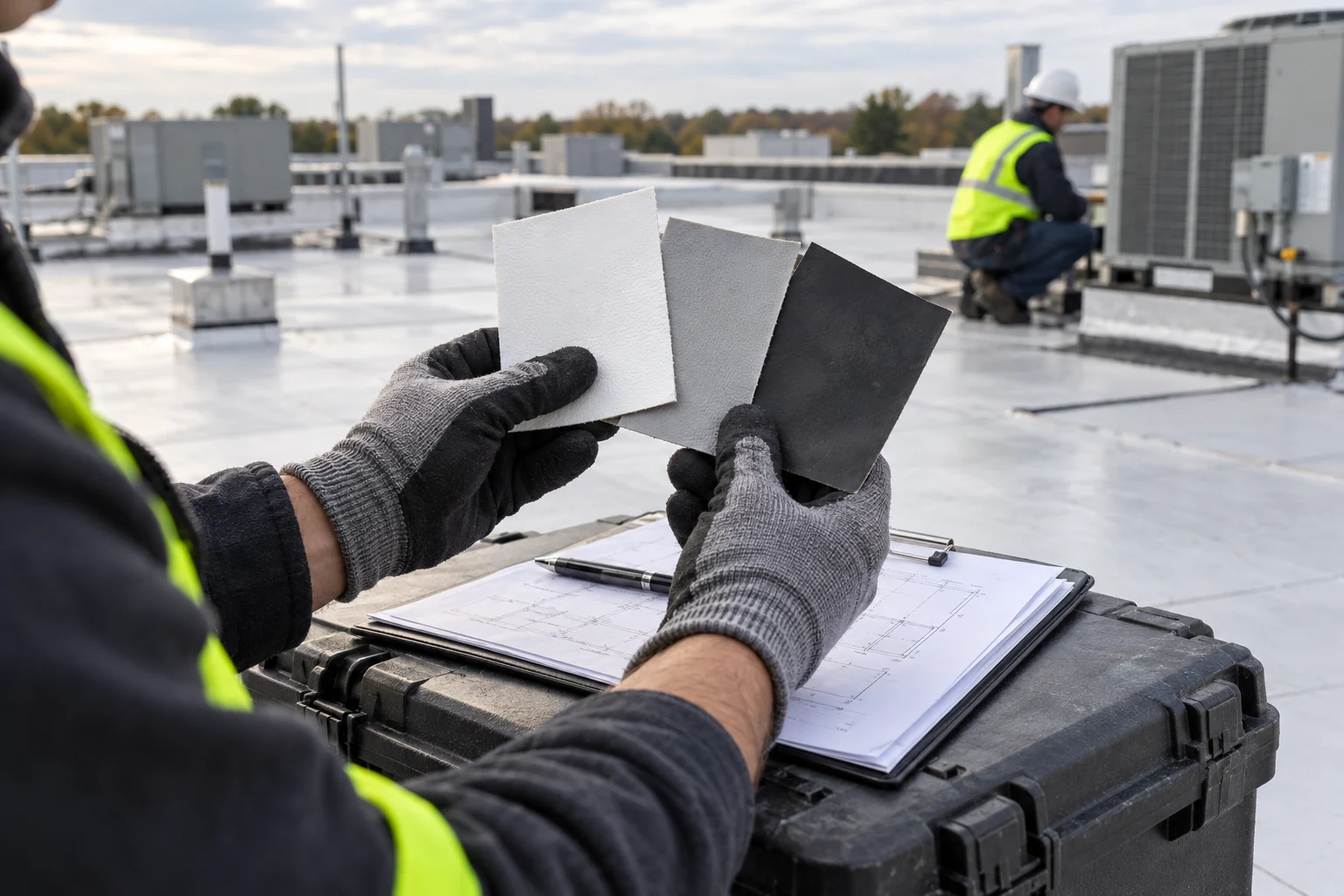
A compatible repair depends on the material and its condition. TPO and PVC are thermoplastic membranes, while EPDM is synthetic rubber. Their repair products and preparation should not be treated as interchangeable.
We offer these repair services for commercial roofs in Flagstaff. The guides explain what can be repaired and what needs assessment before work is recommended. If the records are unclear, the rubber roof guide provides a starting point.
Choose the known membrane, or tell us what you have observed and let the assessment establish the material.
For A Known TPO Membrane
Repair open seams, punctures, and damaged flashing on an identified TPO membrane.
Explore The Repair Approach →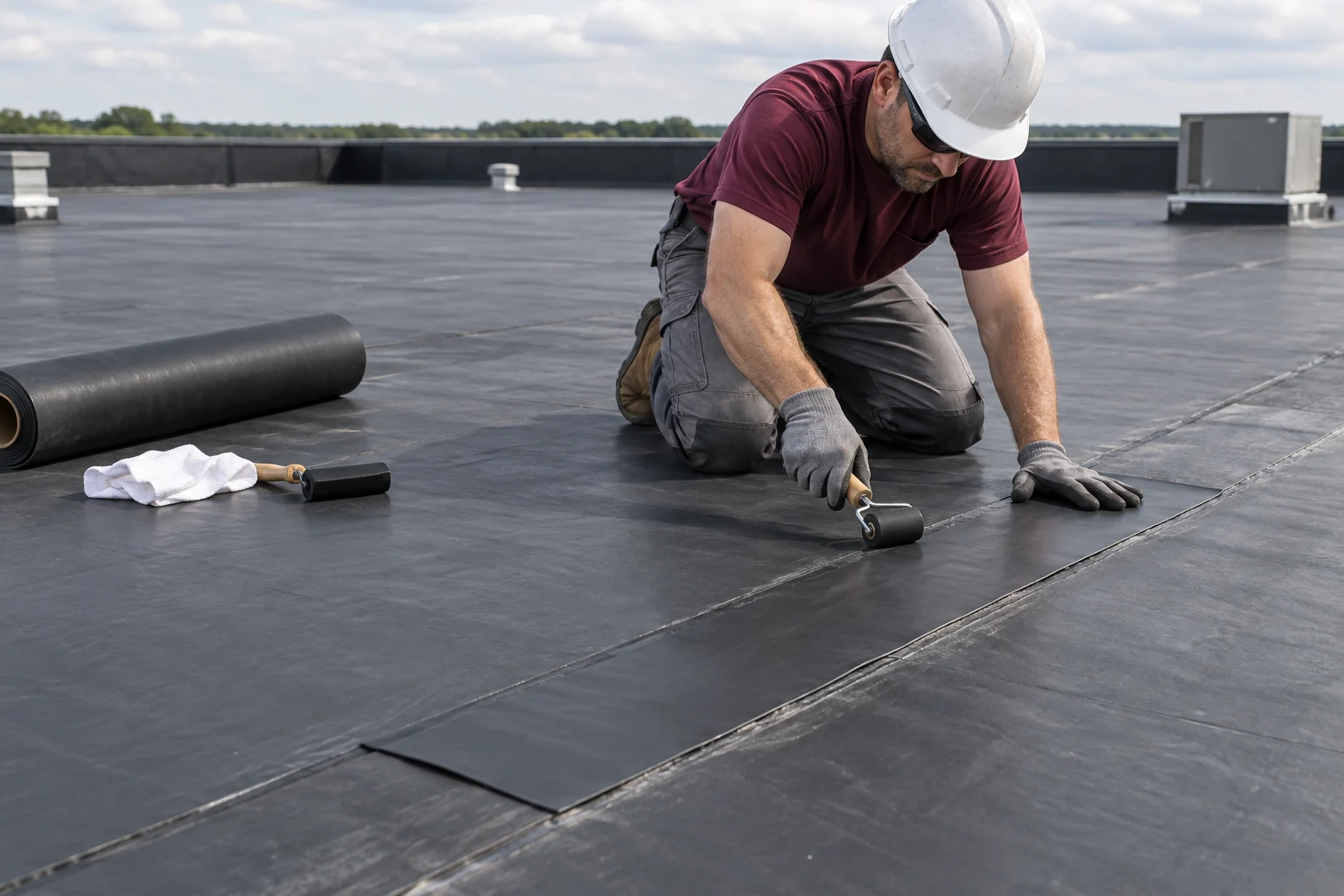
For A Known EPDM Membrane
Repair commercial EPDM rubber using materials that suit the existing membrane and its condition.
Explore The Repair Approach →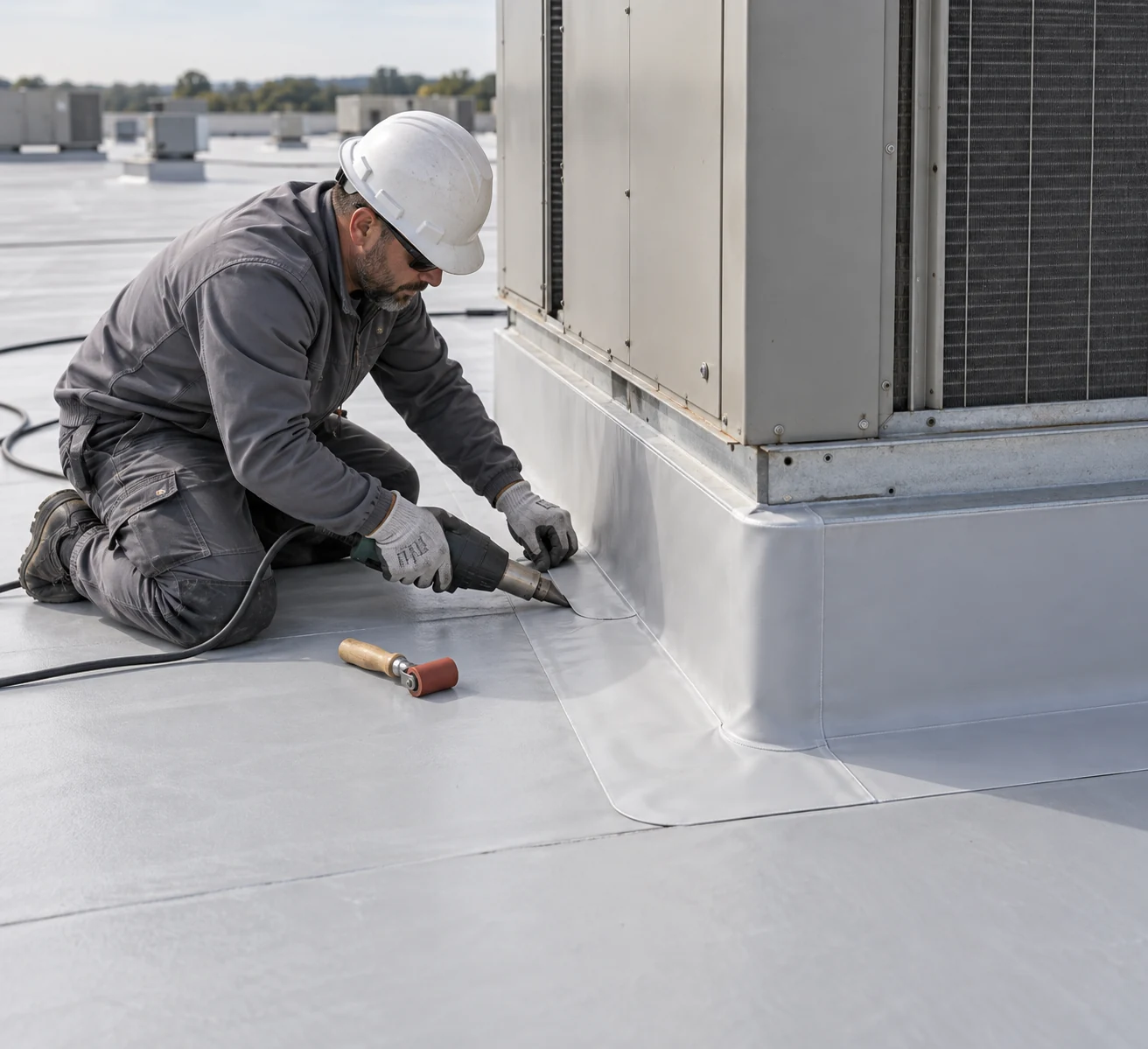
For A Known PVC Membrane
Address leaks and damaged details with repairs compatible with the building’s PVC roofing system.
Explore The Repair Approach →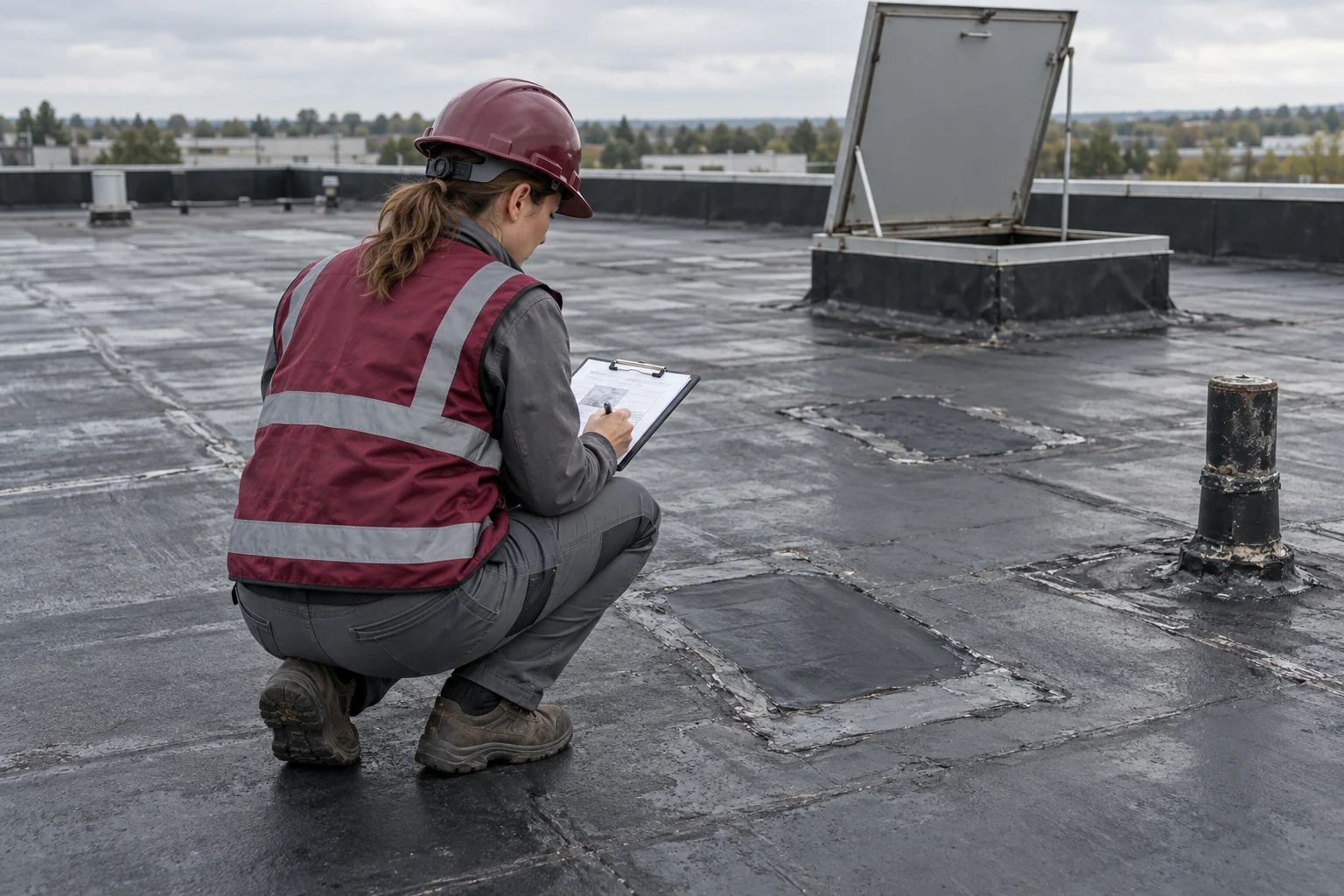
When The Material Is Uncertain
Identify an unfamiliar rubber roof and work out which repair materials can be used safely.
Explore The Repair Approach →| What You Have Noticed | Helpful Information |
|---|---|
| A New Leak | When it started, the interior location, and recent roof or equipment work. |
| A Recurring Leak | Previous repair locations and whether the timing or affected area has changed. |
| Visible Damage | The location and any available photographs taken without unsafe roof access. |
| Water Collecting On The Roof | Where it remains and whether outlets or nearby details may be involved. |
The repair description should identify the defect, included locations, preparation, materials, and any work beneath the membrane. Ask what remains outside the repair and whether further investigation is needed. That gives you a clearer basis for approval than a price attached only to “roof patching.”
We connect the reported leak with the relevant roof section, then examine the membrane and nearby details. An opening in a seam, damaged flashing, or an old patch can require different work. The assessment should explain what was found and any areas that could not be checked.
Sometimes the visible surface is only part of the problem. Suspected wet insulation or damage below the covering may need further investigation. A repair recommendation should distinguish those concerns from a straightforward patch so you understand what is included.
Two repair estimates can cover different areas even when both use the word patch. Look for the defect location, preparation, materials, and treatment of connected details. Ask whether earlier patches need removal and how additional findings would be handled.
A limited repair can be useful without renewing the entire roof. Its purpose and limits should be stated plainly. If the surrounding membrane is badly deteriorated, another small patch may offer less value than investigating a broader repair or replacement project.
Retain the repair description and identify where the work was performed. If water appears again, report its location, timing, and whether the symptom changed. Those details help the responsible contractor understand the next concern.
Also record later rooftop equipment work or new openings near the repaired area. A roof can develop a different defect after a repair, and an accurate history helps separate the two. Keep any written coverage and maintenance information with the repair record.
Start with rubber roof repair. It explains how records and inspection help identify a membrane before selecting repair materials.
Not necessarily. TPO, PVC, and EPDM can require different materials and methods. Appearance is not enough to establish compatibility.
Yes. A leak near equipment or a roof transition can involve several connected components. The assessment should consider them together.
No. The number and type of defects, preparation, material condition, access, and affected layers matter more than area alone.
Yes. Explain the longer-term project so any immediate repair has a clear purpose and its limits are understood.
Share the earlier work description and explain whether the symptom changed. The next assessment should investigate the current source and inspect relevant connected details. Another patch may be appropriate, but the recommendation should explain what it addresses that the earlier work did not resolve.
Call (928) 430-5707 to discuss your building and arrange the next step.